Do you want to learn more about GNET ?
Click on the button below and download the guidelines for moderators to host debates.


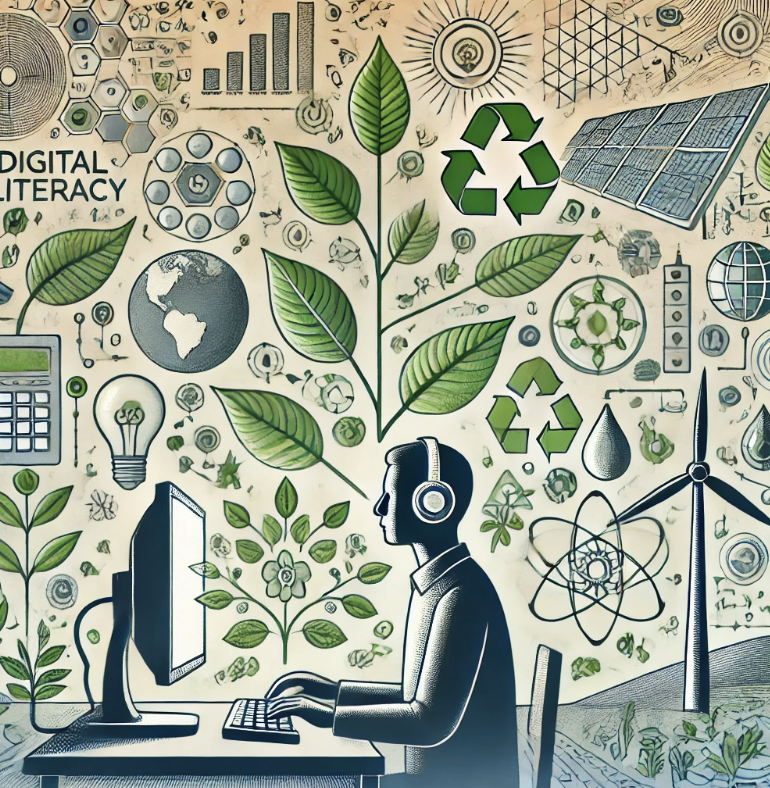
When we think about a “digital detox,” it’s usually about giving ourselves a break—getting a bit more headspace, improving our focus, or spending proper time with friends and family. But what if logging off could also do the planet a favour? It might not be obvious, but every email you send, every video you stream, and every scroll through social media has an environmental cost.
So, is it time to rethink how much time we spend glued to our screens—not just for our own well-being, but for the sake of the environment?
It’s easy to imagine the digital world as something intangible, floating in the cloud. But the reality is far from weightless. Every tap, click, and stream requires real energy:
Data Centres: These are the backbone of the internet, storing everything we see and use online. But they’re power-hungry beasts, requiring enormous amounts of energy to keep running and stay cool. Some of the largest centres have carbon footprints comparable to small countries.
Streaming Services: Watching videos online gobbles up around 60% of global internet traffic. Streaming in high definition? That’s even more energy-intensive, demanding vast amounts of bandwidth.
Device Usage: Charging our gadgets—smartphones, laptops, tablets—may seem insignificant individually. But when billions of us are plugging in every day, it adds up quickly.
The good news is, even small changes to our digital habits can help reduce energy use. Here are a few simple ways to lighten your footprint:
Stream Smarter
Switch to lower resolution when streaming, or download content to watch offline.
Turn off autoplay for videos or music you’re not actively engaging with.
Close Unused Tabs
Keeping endless browser tabs open isn’t just a drain on your computer—it also consumes server energy. Shut down what you don’t need.
Declutter Your Inbox
Unsubscribe from newsletters you never read. Fewer emails mean less energy spent storing and transferring them.
Set Tech-Free Times
Regular breaks from devices don’t just recharge you—they cut down on energy use too. Set aside time each day to go screen-free.
Think Before You Click
Every tap and swipe involves data transfer. Being mindful about your online activity—like skipping unnecessary searches or mindless scrolling—can reduce your impact.
While individual efforts matter, it’s also about pushing for wider change. The tech industry needs to step up, and here’s how we can encourage them:
Support Sustainable Tech: Buy from brands prioritising energy-efficient designs and ethical production.
Advocate for Green Energy: Push for data centres and tech companies to use renewable energy sources like wind or solar.
Champion Digital Minimalism: Call on platforms to design tools that encourage mindful use instead of maximising screen time.
So, what do you think?
Can cutting our own screen time genuinely help reduce global energy consumption?
Should big tech take more responsibility for their environmental footprint?
How do we balance staying connected with living sustainably?
Let’s hear your thoughts—can we really log off for the planet? Share your ideas and let’s get the conversation going.
You must be logged in to post a comment.







Click on the button below and download the guidelines for moderators to host debates.
Small changes in personal habits can collectively reduce energy use, especially with billions of users worldwide.
Big tech companies should take more responsibility for their environmental footprint becuase, as major energy consumers, tech companies must prioritize green energy and sustainable practices.
We can balance staying connected with living sustainably by being mindful of our digital habits, using energy-efficient devices, and supporting platforms that promote sustainability.
This article highlights how our online activities impact the environment, even if we don’t notice it. Small actions, like lowering streaming quality or closing unused tabs, can make a big difference. It’s also crucial to push tech companies to adopt renewable energy and sustainable designs. By working together, we can make the digital world greener without losing connectivity.
I never really tought about the inactive energy usage befere. I have some forever open tabs, imbox full of old emails etc.. And it can be hard for someone to change their habit, even when everyone definitely should think about their action and their energy usage. But I think that the most important thing is to solve the transition to sustainable and ecological energy sources so our usage is not that harmful rather than limit it. At the same time small changes made collectively can definitely help to minimize the harm made before we have big enough ecological power source.
Can cutting our own screen time genuinely help reduce global energy consumption?
As with many issues, this situation is more complex for ordinary people to consider. Of course, each person’s contribution is important, but we should not forget that many people prefer to choose decisions and actions supported by the majority of society. What influences the majority of society? Large companies, the government and information propaganda, advertising available in the general media. So should big tech take more responsibility for their environmental footprint?
Of course yes.
If you want to support the nature of our planet, you can certainly do it for personal reasons, but you must understand that the contribution of one ordinary consumer will not change the whole situation. But if you REALLY want to SUPPORT NATURE, you must invest in this matter on a larger scale. Even many non-political organizations advocating for a green planet have difficulty achieving small global changes. You can join such an organization and contribute to the common cause.
Another option would be to become part of political life. But having a huge status in politics and remaining true to your values is also not an easy task. People are a huge resource, but it is difficult to unite society under a common goal. Someday, perhaps, together we can achieve a healthy Earth. If, of course, the human ego does not destroy it first.
Peace to all.
“Digital detox” benefiting not just our mental health but also the planet is so important. It’s easy to forget that our online activities have a physical and environmental cost. Small changes could make a big difference when done collectively. Tech companies must prioritize renewable energy and sustainable practices. Everyone should take a small steps every day that will lead to a big results.
Thank you for this eye-opening discussion. I’ve always tried to be environmentally conscious by recycling or saving water, but I honestly never considered my “digital carbon footprint” before reading this.
The point about data centres being “power-hungry beasts” is frightening. It makes me realise that every time I stream a movie in 4K on a small phone screen where I can’t even tell the difference, I am wasting real resources.
I think the biggest challenge to living sustainably online is the “Fear Of Missing Out” (FOMO). We feel like we need to be connected 24/7. But as you suggested, setting tech-free times is a great solution. It helps the planet, but it also helps us reconnect with the real world. I’m planning to try the “offline download” tip for my commute instead of streaming via mobile data.
I fully agree with the article´s core premise that digital activities carry a real environmental cost and that large corporations and tech companies should bear greater responsibility for their carbon footprint. The idea that individual “logging off” can help the planet is powerful, and small steps like cleaning up the inboxes or smarter streaming are easily implemented. However, it must be acknowledged that it is very difficult to genuinely reduce digital consumption today, as virtually all professional and personal life has shifted online. Despite this challenge, tools exist to make digitalization beneficial: for instance, search engines like Ecosia actively convert advertising profits into planting trees, demonstrating that our online behavior can be immediately constructive. The key, therefore, is not merely to “log off” but rather to “log smarter”.
Reading this article made me think about how often I use my phone and laptop without really questioning it. I usually connect digital detox with mental health or taking a break from stress, but I had never seriously considered its impact on the environment. The idea that even small online actions—like streaming videos or constantly checking social media—consume real energy is quite eye-opening.
What I find important is that digital detox doesn’t mean completely disconnecting from technology. For me, it’s more about being aware of how and why I use it. Simple habits like turning off autoplay, cleaning my inbox, or choosing lower video quality seem easy, but if many people did this, the effect could be significant.
At the same time, I believe individuals shouldn’t carry all the responsibility. Big tech companies have much more power to create change, especially by using renewable energy and designing platforms that don’t encourage endless scrolling. In my opinion, a sustainable digital future needs both mindful users and responsible companies working together.
Small habits can help, but I think that most of us are really down the rabbit hole of the internet. The companies blantly told us that the thing they are competing with is our sleep